How to Choose the Best Kids' Scooter by Age
A scooter is often the first set of wheels a child can really call their own, and the right one can turn the walk to nursery, school or the park into the best part of the day. The trouble is that a scooter that suits a confident eight-year-old will feel unwieldy to a toddler, and a toddler's model will be outgrown in no time by an older child. This guide explains how to choose the best kids' scooter by age, what the key features actually do, and which safety basics matter at every stage.
Why age matters when choosing a kids' scooter
Children develop balance, coordination and judgement at different rates, but age is still a useful starting point. A scooter that matches your child's stage will feel stable and easy to control, which builds confidence. One that is too advanced can lead to wobbles, falls and a scooter that ends up abandoned in the hallway.
When you compare models, think about three things together:
- Age and size – height affects handlebar fit, and weight affects the maximum load the scooter is designed for.
- Balance and experience – a child who already rides a balance bike may be ready for two wheels sooner.
- Where they will ride – smooth pavements and park paths, or rougher surfaces on the way to school.
Treat age ranges on product pages as guidance, then adjust for your own child.
The best scooter for toddlers and preschoolers: three wheels first
For most children aged roughly two to five, a three-wheel scooter is the natural first choice. With two wheels at the front (or occasionally at the back), the scooter stands up by itself and gives a much wider, steadier base.
Lean-to-steer vs handlebar steering
Many toddler scooters use lean-to-steer: the child tilts their body and the front wheels turn. This feels intuitive and helps develop balance in a way that carries over to two-wheel riding later. Some models use a conventional turning handlebar, which can feel more familiar but is easier to over-steer at low speed.
What to look for in a first scooter
- A low, wide deck so small feet fit comfortably and stepping on and off is easy
- Lightweight construction so a parent can carry it when little legs get tired
- A simple rear foot brake that a small child can press without much force
- Handlebar grips sized for small hands, ideally with protective ends
- Adjustable handlebar height so the scooter grows with them
Some three-wheel scooters convert from a sit-on ride-on to a standing scooter, which can be handy for younger toddlers who are not quite ready to stand and push.
Moving to two wheels: scooters for ages five to eight
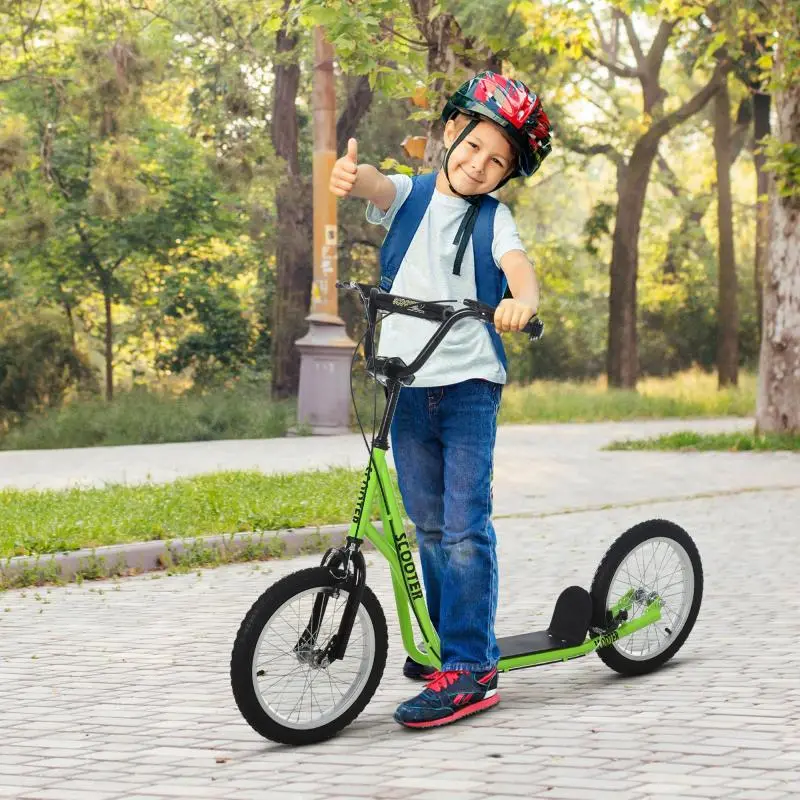
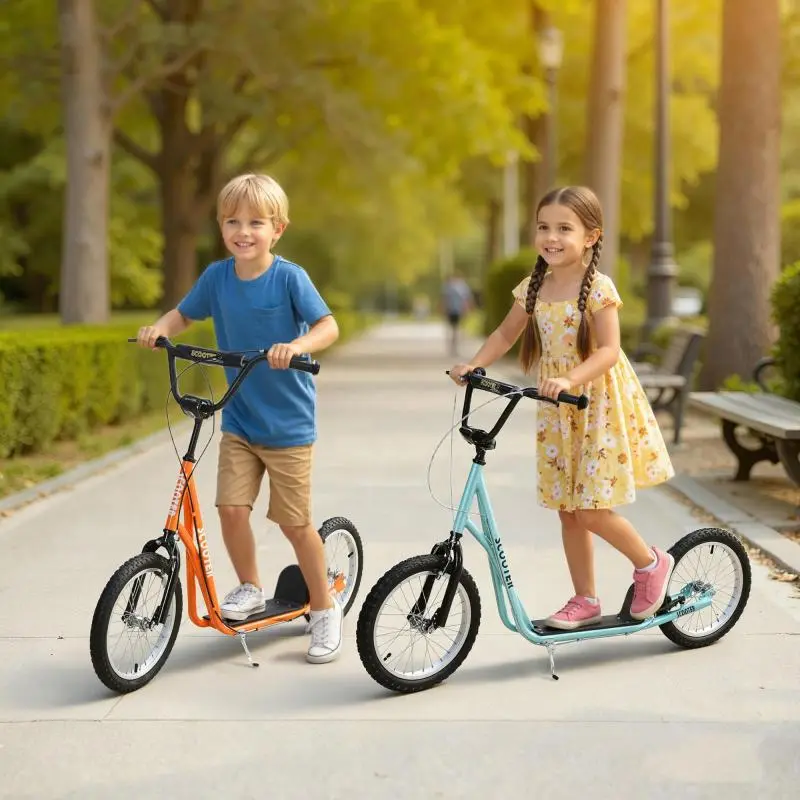
Somewhere between five and eight, many children are ready for a two-wheel kids' scooter. Two-wheelers are faster, more agile and better for longer journeys, but they demand more balance, particularly at low speeds and when turning.
Signs your child may be ready include:
- They ride their three-wheeler confidently and use the brake without thinking
- They are comfortable on a balance bike or bicycle
- They want to keep up with older siblings or friends
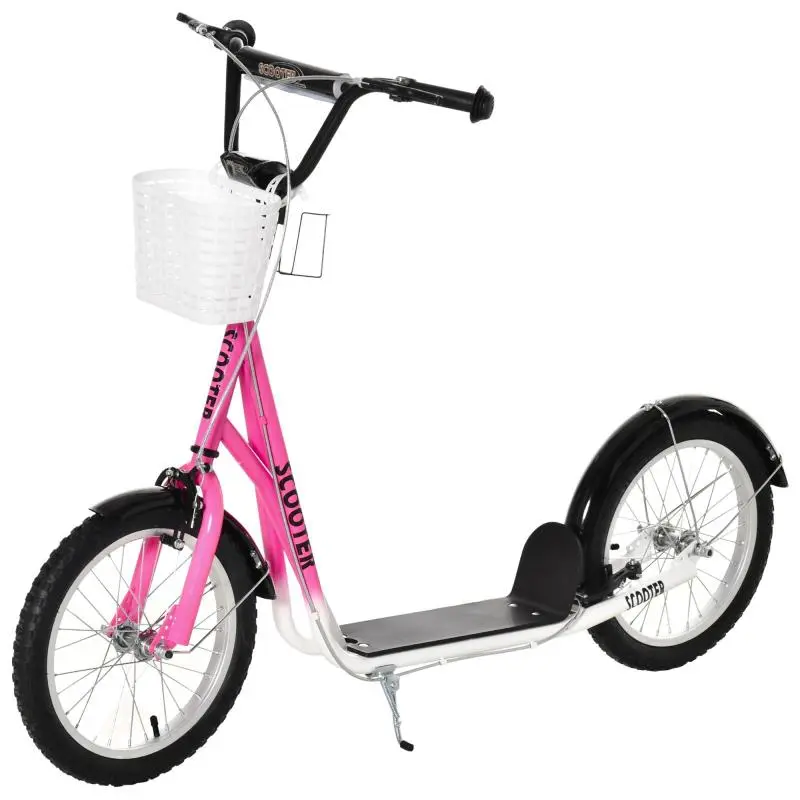
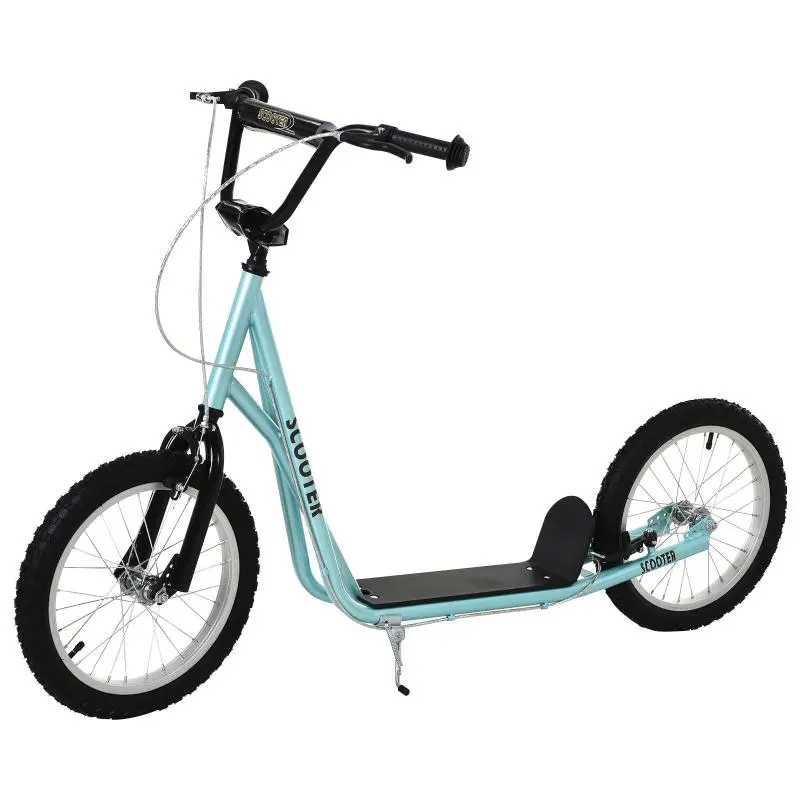
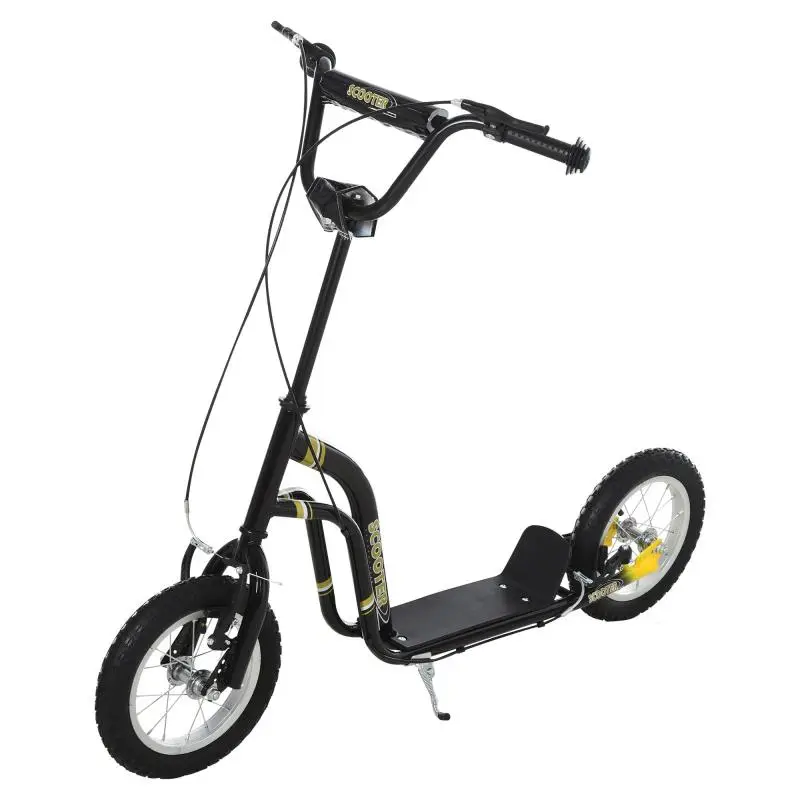
At this stage, larger wheels make a noticeable difference. Bigger wheels roll more smoothly over cracks and uneven paving, which means fewer sudden stops. A slightly wider deck and a sturdy folding mechanism are also worth prioritising, especially if the scooter will be carried onto public transport or stored in a car boot.
Scooters for older kids and pre-teens
From around eight upwards, children often want something that looks and feels more grown-up. Two-wheel scooters for this age group tend to have taller adjustable handlebars, larger wheels and a higher maximum load, so they can be used for longer.
Some older children become interested in trick or stunt scooters. These usually have fixed-height handlebars, a reinforced deck and no folding mechanism, which makes them stronger but less practical for commuting. If your child mainly rides to school, a folding two-wheel commuter style is generally the more sensible option.
Key features explained
Whatever the age, a few specifications decide how comfortable and safe a scooter will be.
Deck height
A lower deck means less effort to push off and a lower centre of gravity, which helps stability. Younger children benefit most from a low deck. Older riders on longer journeys may prefer a deck with a little more clearance for kerbs and rougher surfaces.
Adjustable handlebars
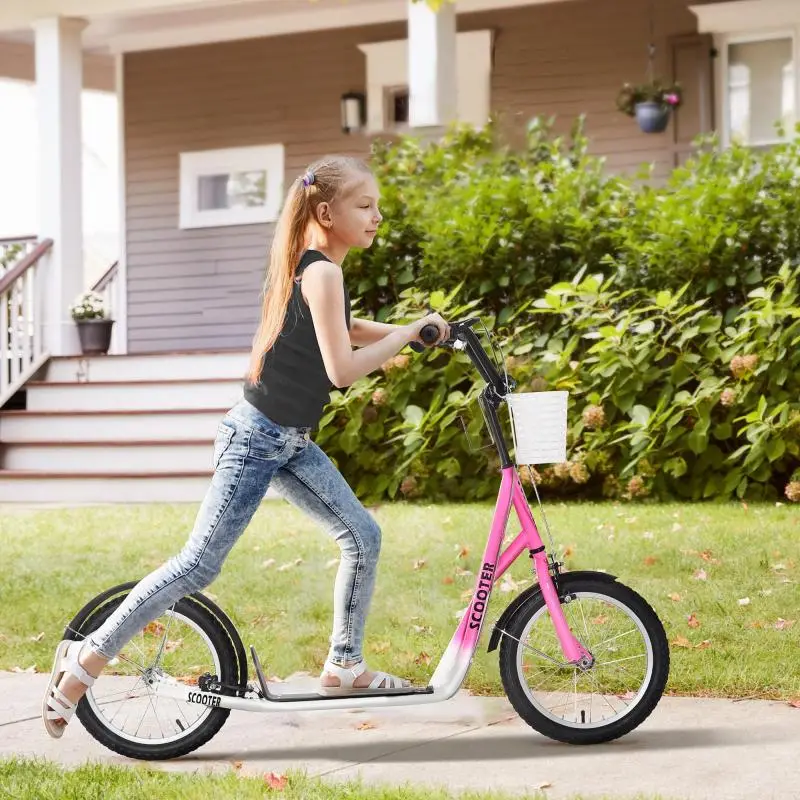
As a general rule of thumb, the handlebars should sit somewhere around your child's waist to hip height when they are standing on the deck. Adjustable handlebars let you raise the bar as they grow, so check the minimum and maximum heights listed in the product details and compare them with your child's measurements.
Brakes
Most kids' scooters use a rear fender brake: the child presses the back mudguard with a foot to slow the wheel. It is simple and reliable. Some larger models add a hand brake. Whichever type you choose, practise braking in a quiet, open space before heading anywhere busier.
LED light-up wheels
Light-up wheels are hugely popular with children and can make a scooter more visible at dusk. Many are powered by the motion of the wheel, so there are no batteries to replace. They are a fun extra, but they do not replace proper lights or reflective clothing if your child rides in low light.
Weight limit
Every scooter has a maximum user weight set by the manufacturer. Always check it, and choose a model with some headroom above your child's current weight so it lasts as they grow. Never let an adult or older sibling ride a scooter intended for a small child.
Safety gear and good habits
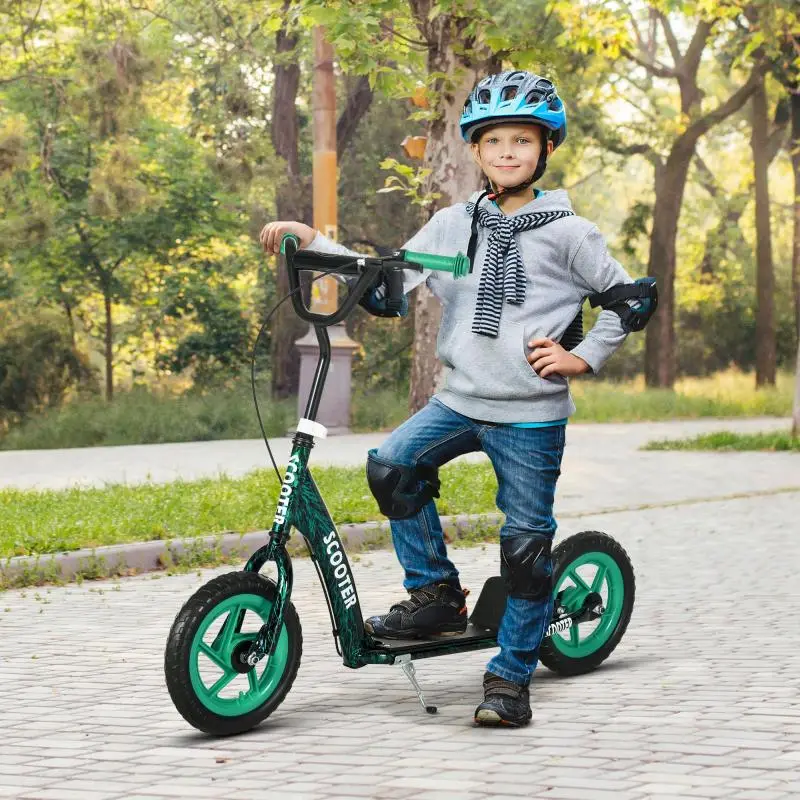
The best kids' scooter is only part of the picture. Good protective gear and sensible habits matter just as much:
- A properly fitted helmet every time they ride, sitting level on the head and fastened snugly
- Knee and elbow pads, especially while learning
- Wrist guards for children who tend to put their hands out when they fall
- Closed shoes with grippy soles – never sandals or bare feet
- Bright or reflective clothing in poor light
Young children should always be supervised by an adult. Start in safe, traffic-free spaces such as parks or empty playgrounds, and teach them to stop at kerbs, watch for pedestrians and keep to a walking pace in crowded areas. Rules on where scooters may be ridden vary between countries and even between towns, so check what applies where you live.
Finally, give the scooter a quick check every so often: make sure the folding clamp locks firmly, the handlebars do not twist, the wheels spin freely and the brake works properly.
Frequently asked questions
What age can a child start using a scooter?
Many children start on a three-wheel scooter at around two or three, once they can stand and walk steadily. Look at the manufacturer's recommended age and maximum load, and always supervise closely in the early stages.
Is a three-wheel or two-wheel scooter better for a five-year-old?
It depends on the child. A five-year-old who is still building confidence will usually be happier on three wheels, while one who already rides a balance bike may be ready for a two-wheel scooter with large wheels and a low deck.
How do I know if the handlebars are the right height?
With your child standing on the deck, the grips should sit roughly between waist and hip height, with elbows slightly bent. If they are hunching over or reaching up, adjust the bar or consider a different model.
Find the right scooter for your child
Choosing the best kids' scooter by age comes down to matching stability, size and features to where your child is right now, with a little room to grow. Whether you are looking for a first three-wheeler or a sturdy two-wheel scooter for the school run, take a look through our kids' scooter range. Every order ships free from our EU warehouses, usually arriving within about two to five days, with no customs fees to worry about.