Freestanding Boxing Bag Training at Home: A Beginner's Guide
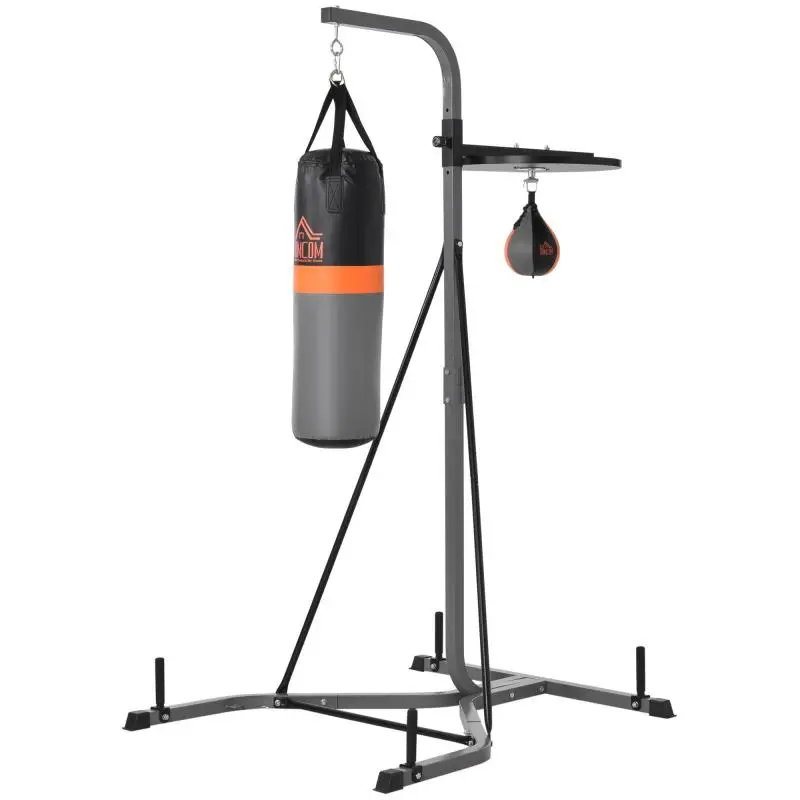
Few workouts are as satisfying after a long day as a round on the bag. A freestanding boxing bag brings that training into your living room, garage or spare room without drilling into ceilings or installing brackets. Whether you want a fun cardio session, a way to release stress or a first step into boxing technique, this guide covers how to choose, set up and train with a freestanding boxing bag at home.
Freestanding vs hanging boxing bag: which suits your home?
Both types have their place, and the right choice depends largely on your space.
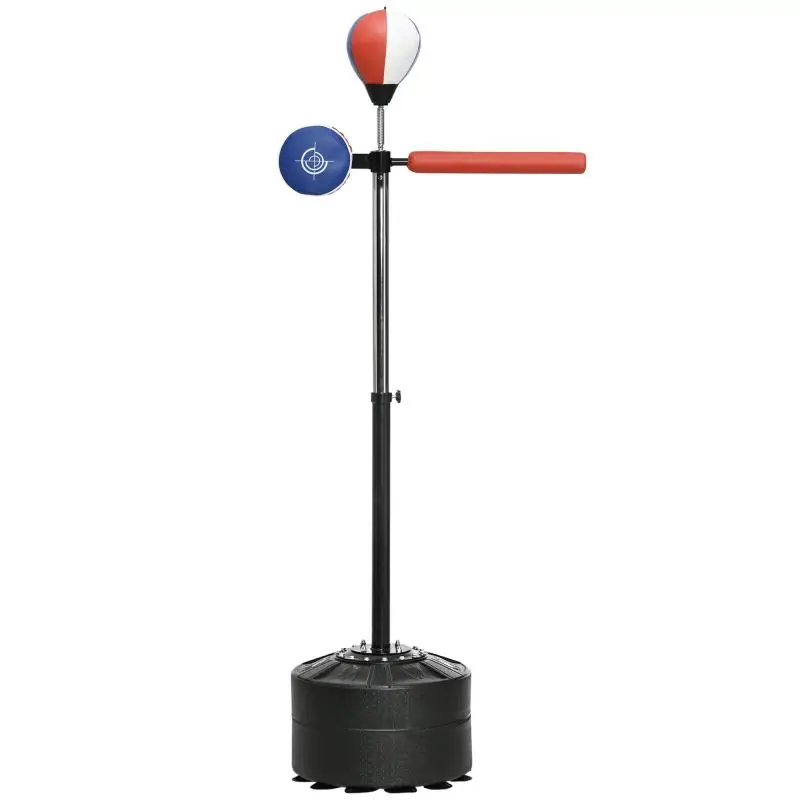
Freestanding boxing bags sit on a weighted base, usually filled with water or sand. They are a strong fit for home training because:
- No ceiling mounts, wall brackets or structural checks are needed
- They can be moved, which is useful in shared or rented homes
- Many are height adjustable, so different family members can train on them
- They suit flats and rooms where hanging is not practical
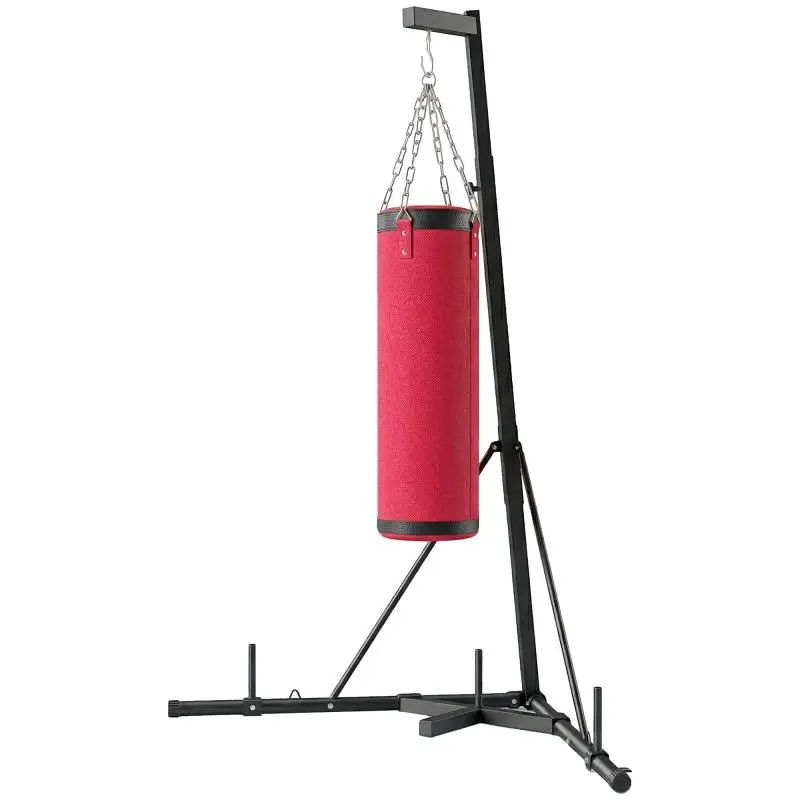
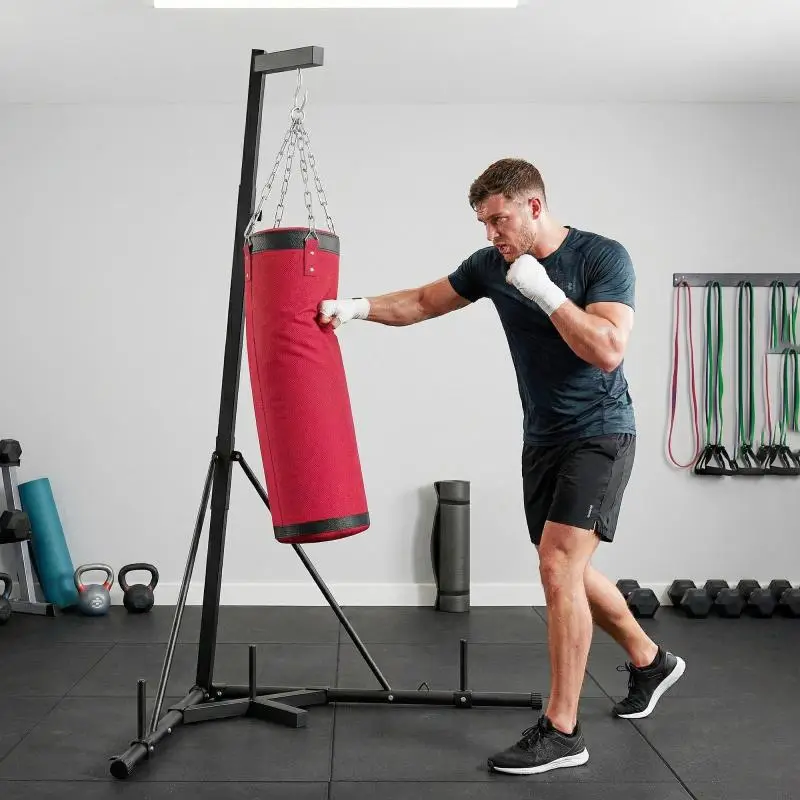
Hanging boxing bags suspend from a ceiling or wall bracket. They swing more naturally, which some boxers prefer for footwork and timing, but they need a strong, suitable fixing point and more clearance around them.
For most people training at home, a freestanding punching bag is the more practical, flexible choice. The trade-off is that a freestanding bag can rock or slide with heavy strikes, which is why setting up the base properly matters so much.
Setting up your freestanding punching bag
Filling the base: water or sand
The base is what keeps your bag upright. Most can be filled with either water or sand – always follow the manufacturer's instructions for your particular model.
- Water is easy to fill with a hose or jug and easy to empty when you want to move the bag. It is lighter than sand for the same volume, so the bag may move more under hard punches.
- Sand is heavier for the same volume, so the bag generally stays put better. It is harder to fill and much harder to empty, so it suits a bag that will stay in one place.
Fill the base fully, check the cap is closed tightly, and wipe away any spills. If the bag still slides, placing it on a rubber mat can help with grip and protect the floor beneath.
Choosing the right spot
- Leave clear space all around the bag so you can move freely and the bag can rock without hitting furniture or walls
- Choose a flat, level, solid floor
- Keep it away from glass doors, windows and anything fragile
- Make sure children and pets are not nearby while you train
Adjusting the height
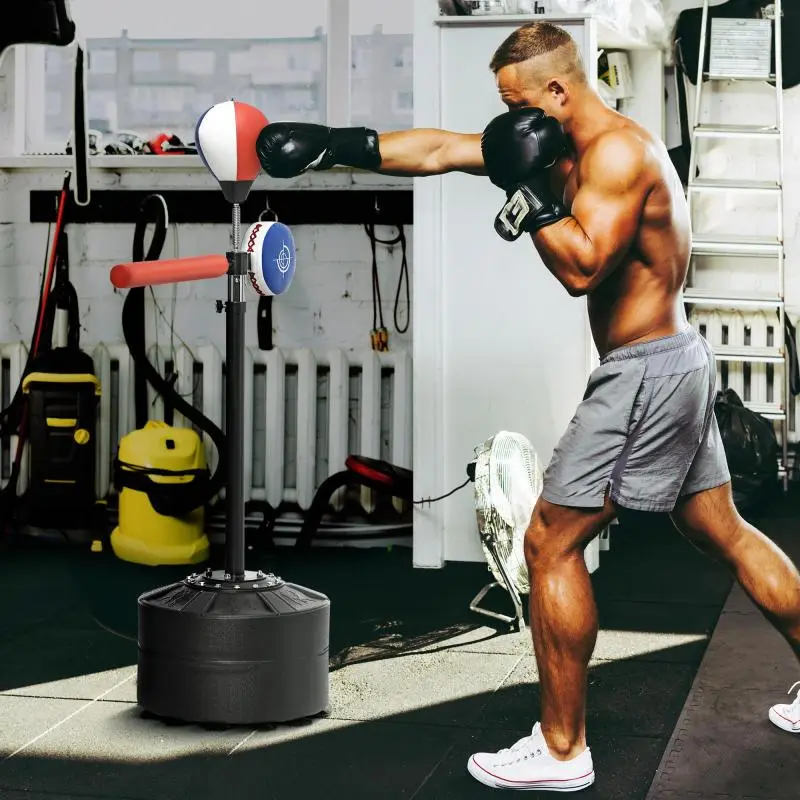
If your bag is adjustable, set it so the upper target area is roughly at your head height. This lets you practise straight punches at a realistic level and body shots lower down.
Gloves and hand wraps: protect your hands
Punching a bag with bare fists is a quick route to sore knuckles and sprained wrists. Two pieces of kit make a big difference.
Hand wraps
Hand wraps are long strips of fabric wound around the wrist, palm and knuckles. They help support the wrist and keep the small bones of the hand compact when you strike. Learning to wrap takes a few attempts, but it soon becomes routine.
Boxing gloves
Bag gloves or general training gloves cushion your hands and protect the bag's surface. When choosing gloves:
- Make sure they fit snugly over your wraps without cutting off circulation
- Look for a secure wrist closure for support
- Let them air-dry after each session to keep them fresh
Never use the bag without some form of hand protection.
Beginner boxing combos to try
Before throwing combinations, learn a basic stance. If you are right-handed, stand with your left foot forward and right foot back, feet about shoulder-width apart, knees softly bent, hands up guarding your chin and elbows tucked in. Left-handers reverse this.
Boxing punches are often numbered:
- 1 – Jab: a quick straight punch with your lead hand
- 2 – Cross: a straight punch with your rear hand, turning the hips and back foot
- 3 – Lead hook: a short, curved punch with your lead hand
- 4 – Rear hook: the same with your rear hand
Simple combinations
Start slowly and focus on form rather than power:
- 1 – jab, return the hand to guard
- 1-2 – jab, cross
- 1-1-2 – double jab, cross
- 1-2-3 – jab, cross, lead hook
- 1-2-3-2 – jab, cross, lead hook, cross
A simple beginner session
- Warm-up: a few minutes of skipping on the spot, shoulder circles and shadow boxing
- Rounds: try three to five rounds of two minutes on the bag, with one minute of rest between rounds
- Cool-down: easy movement and gentle stretching for shoulders, chest and hips
Keep breathing out with each punch, stay light on your feet and bring your hands back to guard after every strike. If you are new to exercise or have any health concerns, check with a medical professional before starting a new training routine.
Keeping the noise down
A freestanding boxing bag is generally quieter than a hanging bag rattling on chains, but it can still create thuds and some rocking. To keep neighbours and the rest of the household happy:
- Place the bag on a thick rubber mat or interlocking floor tiles to absorb impact
- Fill the base completely so it rocks less
- Focus on technique and speed rather than maximum power during quieter hours
- Train on the ground floor or in a garage if you have the option
- Agree on training times with others in the home
Frequently asked questions
Should I fill my boxing bag base with water or sand?
Water is easier to fill and empty, which suits a bag you may move. Sand is heavier for the same volume and tends to keep the bag more stable. Always follow your bag's instructions on what the base can safely hold.
Do I really need hand wraps if I wear gloves?
Wraps add support to the wrists and knuckles that gloves alone do not fully provide. For anything more than a light session, wearing both is a good habit to build.
How often should a beginner train on a boxing bag?
Start with two or three short sessions a week and allow time to recover between them. Increase the number of rounds gradually as your technique and fitness improve, and rest if anything hurts.
Start training at home
A freestanding boxing bag is a versatile way to build fitness, coordination and confidence without leaving the house. With a well-filled base, the right hand protection and a few simple combos, you can get a satisfying workout in a small space. Take a look through our home fitness range to find equipment that suits your space, all shipped free from our EU warehouses and typically delivered in about two to five days, with no customs fees.